-
Chronic kidney disease happens when your kidneys no longer filter your blood the way they should, so wastes and extra fluids accumulate in your body.
The two main causes of chronic kidney disease are diabetes and high blood pressure, which are responsible for up to two-thirds of the cases.
Other conditions that affect the kidneys are:
Glomerulonephritis: a disease that causes inflammation and damage to the kidney's filtering units. This disorder is the third most common type of kidney disease.
Inherited diseases, such as polycystic kidney disease, which causes large cysts to form in the kidneys and damage the surrounding tissue.
Malformations that occur as a baby develops in its mother's womb. For example, a narrowing may occur that prevents normal outflow of urine and causes urine to flow back up to the kidney. This causes infections and may damage the kidneys.
Autoimmune diseases such as lupus
Obstructions caused by problems like kidney stones, tumors or an enlarged prostate gland in men.
Repeated urinary infections.
Most people may not have any severe symptoms until their kidney disease is advanced. However, you may notice that you:
feel more tired and have less energy
have trouble concentrating
have a poor appetite
have trouble sleeping
have dry, itchy skin
have swollen feet and ankles
have puffiness around your eyes, especially in the morning
have muscle cramping at night
need to urinate more often, especially at night.
Chronic kidney disease comes in five stages.
Stage 5 also known as kidney failure or end stage renal disease (ESRD) is when kidneys functionbelow 10-15% of their normal capacity.
Kidney failure usually occurs after years of having chronic kidney disease. Less common is acute kidney failure, a sudden stop of kidney function usually seen in critically ill hospitalized patients.
Whichever the case may be, it is vital that a person with kidney failure receives a kidney replacement therapy to stay alive.
When it comes to treating end stage renal disease, the treatment is dialysis unless your doctor thinks you are a good candidate for a kidney transplant.
Still you will need dialysis while waiting for a matching kidney donor. Dialysis keeps your body in balance by removing waste, salt and extra water to prevent them from building up in the body and helping to control blood pressure.
There are two major dialysis choices that can suit your lifestyle and underlying medical conditions: hemodialysis and peritoneal dialysis.
-
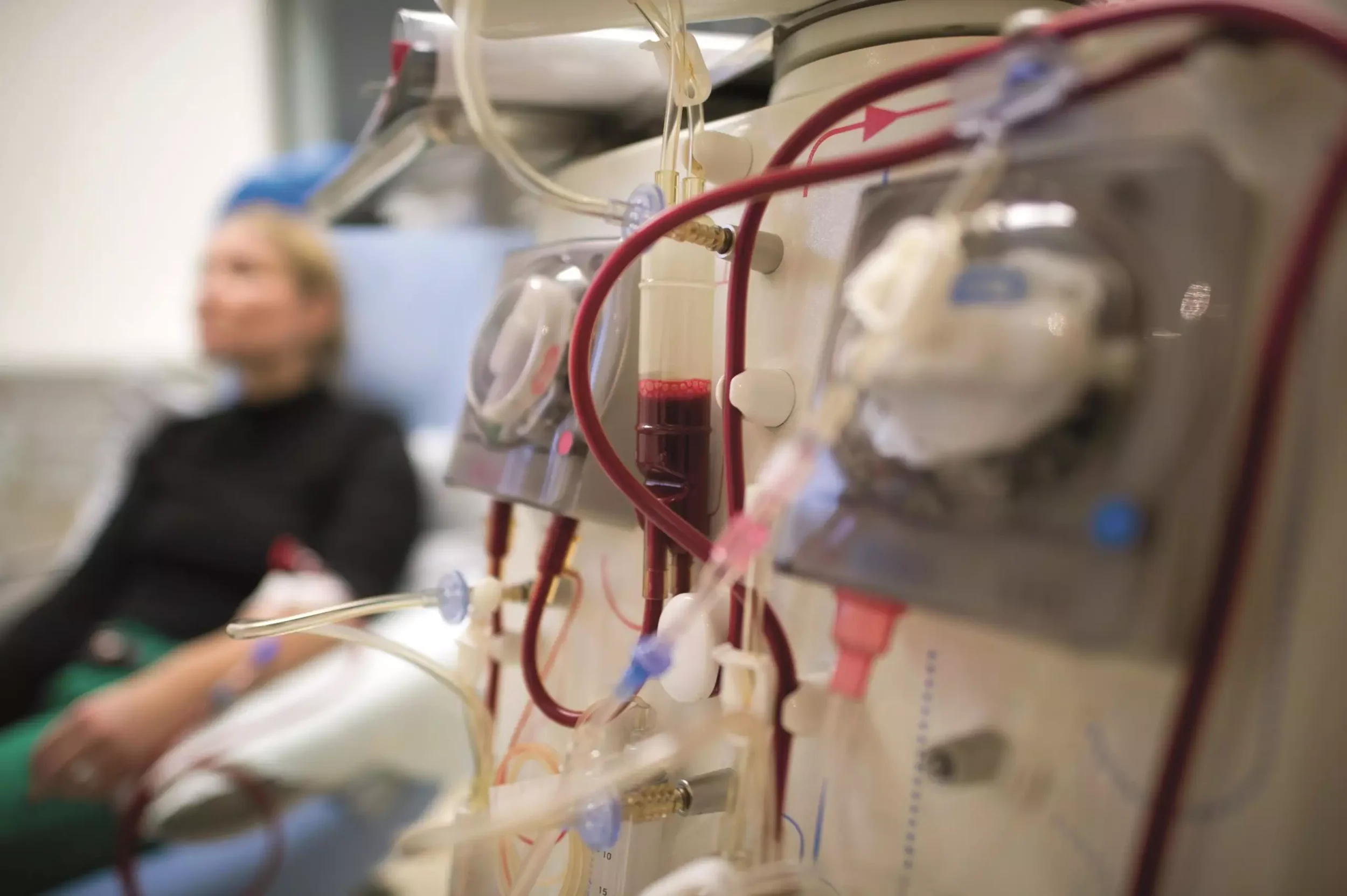
Hemodialysis is the most common way to treat advanced kidney failure. In hemodialysis, a machine filters wastes, salts and fluid from your blood when your kidneys are no longer healthy enough to do this work adequately.
The procedure can help you carry on an active life despite failing kidneys. For hemodialysis, you are connected to a filter (dialyzer) by tubes attached to your blood vessels.
Your blood is slowly pumped from your body into the dialyzer, it is filtered and then pumped back into your body.
Hemodialysis may improve your quality of life and increase your life expectancy, however it does not reverse chronic kidney failure.
Hemodialysis treatment usually lasts about four hours and is done three times per week. There are different types of hemodialysis that can suit your lifestyle and underlying medical conditions:
In-center hemodialysis: Get treatments at a dialysis center from caring kidney care professionals and interact with other patients.
Home hemodialysis: Perform hemodialysis in the privacy of your own home, with a trained care partner to help you with treatments.
Nocturnal hemodialysis in-center or at home: Turn sleep time into dialysis treatment time. Hemodialysis is done 3 to 7 nights a week. Each session is done overnight (about 6 to 8 hours).
Before dialysis treatment can begin, your vascular surgeon will need to create a site where the blood can flow in and out of your body during the dialysis sessions.
This is called a dialysis access. Your vascular surgeon will perform an extensive physical exam to identify satisfactory vessels to construct the fistula or implant a graft.
He or she will then perform (or request) an ultrasound study for “vein mapping” of your arms or even legs looking to identify the best available (if any) vein for fistula planning.
The typical site to get your first access is the wrist or forearm of your non dominant hand.
If these sites are not suitable or have already been used, then your vascular surgeon may choose to use the wrist or forearm of the dominant hand before eventually using the upper arm or even your groin’s veins.
-
Peritoneal dialysis (PD) can be an excellent (if not better for some patients) alternative to hemodialysis. Peritoneal dialysisuses a natural membrane inside your abdomen (peritoneal membrane) as a filter to clear wastes and extra fluid from your body and to return electrolyte levels to normal.
You will need to have a peritoneal dialysis catheter placed in your belly (dialysis access) before you begin dialysis.
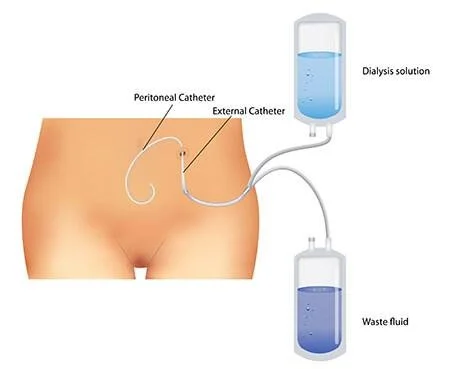
A PDcatheter is a flexible silicon tube (Tenckhoff ) that allows dialysis fluid to enter the abdominal cavity, dwell inside for a while, and then drain back out again.
There are several different designs and manufacturers, but there is no evidence that one type of catheter works better than another.
Peritoneal dialysis is a good treatment option for people who have kidney failure. Advantages include:
Few dietary or fluid restrictions.
No needle sticks.
Independence and ability to normalize daily routines.
The ability to do the dialysis at home on your own schedule.
Reduced dependence on blood pressure medicine.
Fewer problems with anemia.
The process of doing peritoneal dialysis is called an exchange and it includes the following steps
Fill: Dialysis fluid enters yourperitoneal cavity
Dwell: While the fluid is in your peritoneal cavity, extra fluid and waste travel across the peritoneal membrane into the dialysis fluid.
Drain: After a few hours, the dialysis fluid is drained and replaced with new fluid.
-
A kidney transplant, though not a cure, can be the ultimate treatment for a patient with end stage renal disease. This involves having a healthy kidney from another person surgically placed into the body.
The new, donated kidney does the work that the two failed kidneys used to do.
There are two types of donors:
Living donors: A living donor may be a family member, a friend, a coworker, or any person who is willing to give a kidney to someone in need. A person only needs one healthy kidney to live.
Cadaver donors: A cadaver donor is someone who has recently died. Most donor kidneys come from this source.
Due to the shortage of kidneys, patients on the waiting list for a deceased donor kidney may wait many years. A kidney transplant though isn't for everyone. You may have a condition that makes the transplant surgery dangerous or not likely to succeed.
A successful transplant takes a coordinated effort from your whole health care team. Your team includes, your nephrologist, transplant surgeon, transplant coordinator, pharmacist, dietitian, and social worker— as well as you and your family. If your nephrologist thinks you are a candidate for a kidney transplant you will undergo several tests to confirm your eligibility (good overall health, no significant heart or lung disease, no cancer) to enter the transplant list. Tests will also be done to make sure the donor kidney matches your tissue type and blood type. This helps reduce the chances that your body will reject the new kidney.
Learn more on the treatment options
(from Cleveland Clinic)
-
![ARTERIOVENOUS FISTULA AVF]()
Arteriovenous fistula (AVF)
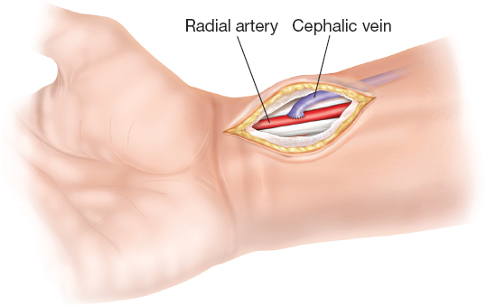
The best long-term option for hemodialysis access is an arteriovenous (AV) fistula.
An AV fistula is made by connecting an artery to a vein (usually in the wrist, forearm or arm). The artery normally carries high-pressure, high-flow blood to the hand; the vein carries low-pressure, low-flow blood back to the heart. Connecting them diverts arterial flow into the vein, which then enlarges over time to handle the increased flow — this is called fistula maturation, which usually takes six weeks to four months. A mature fistula is often larger, visible, and has a strong “buzz” (thrill) — signs it is ready for needle access and dialysis.
Fistula creation is a minor surgical procedure, usually done as an outpatient under local anaesthetic with light sedation. The incision is typically 3–6 cm. The surgeon identifies the artery and vein and hand-sews the connection (anastomosis). The skin is closed with a few stitches. The operation lasts about 1–2 hours and most patients go home the same day.
-
![Arteriovenous Graft (AVG)]()
Arteriovenous Graft (AVG)
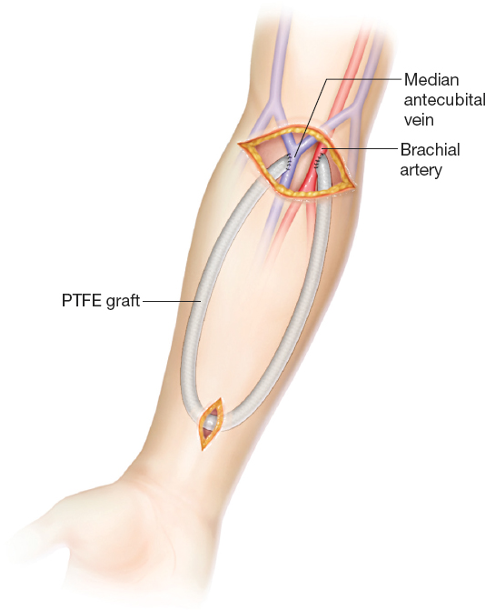
An arteriovenous (AV) graft is used when your veins are too small or damaged to create a fistula.
Instead of joining your own vein and artery directly, your surgeon places a soft, flexible tube (PTFE) under the skin to connect them. This creates a reliable access for dialysis.
What to expect
Usually placed in the forearm or arm
The graft forms a small loop under the skin
It can be used after 2–4 weeks (some special grafts even sooner)
You should feel a gentle “buzz” over it — this means it’s working
The procedure is usually done as an outpatient surgery with local anesthesia and light sedation.
Small incisions are made, the graft is connected to the artery and vein, and you go home the same day.
-
![Vein transposition bypass]()
Vein transposition fistula
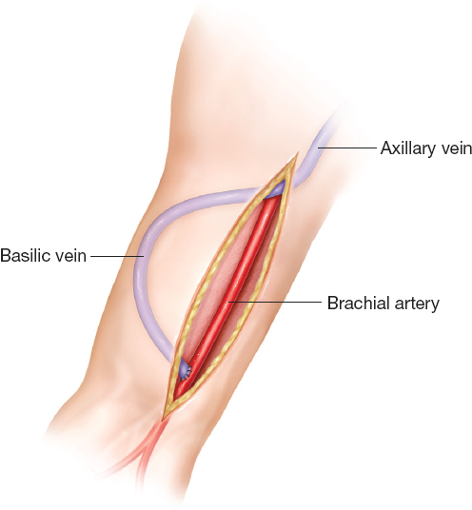
A vein transposition fistula is a surgical procedure designed to create a native arteriovenous fistula when the shallow, easy-to-reach veins in your arm are too small or damaged. In these cases, your vascular surgeons can utilize a larger, healthier vein located deeper under your skin (most commonly the basilic vein). Because this vein is naturally buried too deep for dialysis needles to reach safely, the surgeon carefully moves it closer to the surface of your skin and connects it directly to a nearby artery. This specialized connection significantly boosts blood flow through the vein, causing it to stretch and thicken over time.
The creation of your vein transposition fistula is a precise process that can be performed either in a single operation or divided into two smaller stages.
After the surgery, the relocated vein requires a dedicated healing period—usually spanning several weeks to a few months—known as "maturation."
Healing from a transposition surgery involves longer skin incisions than a standard fistula, which means your arm will need extra care as it recovers.
-
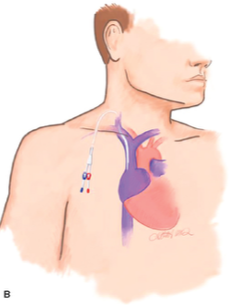
![Dialysis catheter (central line)]()
Dialysis Catheter (tunneled)
Occasionally, an access is made by means of a narrow plastic tube, called a catheter, which is inserted into a large vein in your neck or groin.
Catheters are the least favorable option for hemodialysis as they are associated to a high complication rate including infection and damage of the central veins they’re going through.
They will usually serve as a bridge till you obtain a functional fistula or a graft.
They may otherwise be the only option for patients who have exhausted all other dialysis alternatives.
After sterilizing the access site, under ultrasound guidance your doctor will puncture the target neck or groin vein and introduce the catheter.
Placement of permanent catheters is preferably done by a vascular surgeon in the operating room with minimal (if any) sedation for any minor discomfort as it also involved tunneling of the catheter under the skin. During the procedure, x-rays will be used to confirm the correct positioning of the catheter.
-
![Peritoneal Dialysis Catheter (PD)]()
Peritoneal Dialysis Catheter (PD)
Peritoneal dialysis (PD) can be an excellent (if not better for some patients) alternative to hemodialysis. Peritoneal dialysis uses a natural membrane inside your abdomen (peritoneal membrane) as a filter to clear wastes and extra fluid from your body and to return electrolyte levels to normal.
You will need to have a peritoneal dialysis catheter placed in your belly (dialysis access) before you begin dialysis.
It is considered a minor operation, and typically, a vascular surgeon will perform the procedure.
The procedure usually requires general anesthesia and it usually takes less than one hour of surgical time.
Making a small incision in your abdomen, the surgeon advances the silicon tube deep into the lower part of your abdomen (peritoneal cavity), tunnels the tube under the skin for several inches, brings the tube up through the skin at a different location, and then surgically closes the initial incision. You can usually go home the same day.
Frequently Asked Questions
-
The best approach is to undergo dialysis access surgery well before dialysis therapy needs to begin, which will give the access site time to mature and avoid the use of temporary catheters.
Starting early will also allow time for possible failures and creation of an alternative access. Ideally a dialysis access should be created 6 months to a year before the anticipated access.
This does not apply for a graft as it can be readily available much sooner (1 day for immediate access grafts, 2-6 weeks for standard grafts).
In case you start dialysis earlier than anticipated and before you have a mature fistula, you may need a temporary catheter while you are waiting for your permanent access.
-
Yes, dialysis is something you can do for the rest of your life. Some people have been on dialysis for 30 years or more without getting a transplant.
How long you can live on dialysis, and how well you do, will depend on a number of things, including how healthy you are, your attitude, your quality of healthcare and how much you take an active role in your care.
Most people on dialysis enjoy a good quality of life for many years.
-
Many patients live normal lives except for the time needed for treatments. Dialysis usually makes you feel better because it helps many of the problems caused by kidney failure. You and your family will need time to get used to dialysis.
-
Yes. Dialysis centers are located in every part of the United States and in many foreign countries.
The treatment is standardized. You must make an appointment for dialysis treatments at another center before you go.
The staff at your center may help you make the appointment.
-
Many dialysis patients can go back to work after they have gotten used to dialysis.
If your job has a lot of physical labor (heavy lifting, digging etc), you may need to get a different job.
Still having questions ?
Book your appointment with Dr Psathas in Geneva and receive unbiased, expert vascular care